

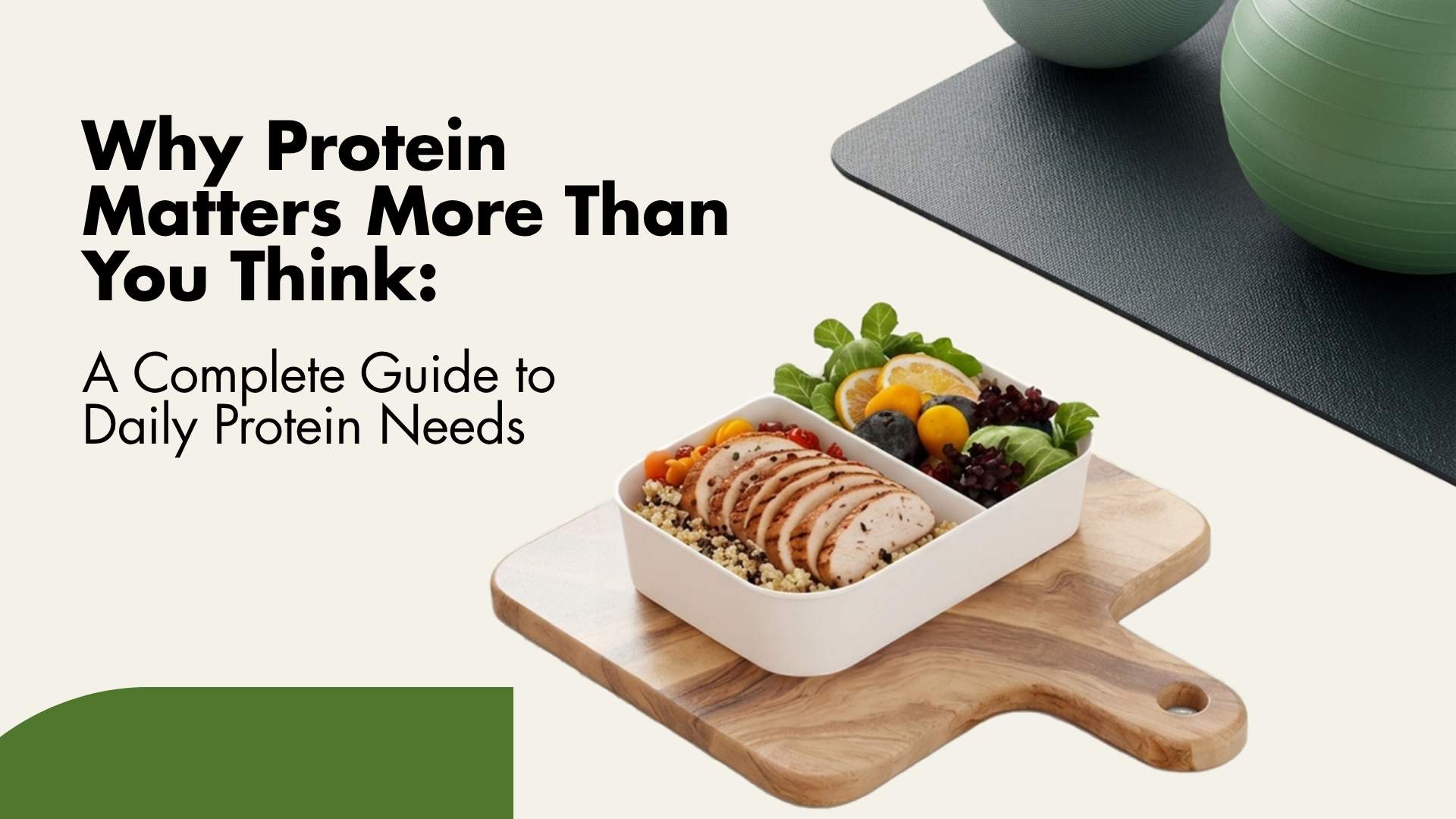
Why Protein Matters More Than You Think: A Complete Guide to Daily Protein Needs
Key Takeaways
Protein isn't just a gym thing - your body uses it for repair, immunity, hormones, and energy.
How much you need daily depends on your weight, age, activity, and goals.
It's one of the most underrated tools for weight loss that actually lasts.
Vegetarian diets can absolutely meet protein needs with the right combinations.
Shakes are optional - real meals do most of the work if planned well.
Be honest - when was the last time you actually thought about how much protein you ate in a day? Not vaguely, but properly? Most of us assume we're getting enough because there's dal in the meal or we had an egg at breakfast. But here's what nobody tells you early enough: why protein is important for our body goes way beyond gym culture and bodybuilding reels. Your body is using it right now - repairing cells, making hormones, running your immune system - whether you lifted a dumbbell today or not.
Once you understand what protein is and why it is important, your everyday food choices start making a lot more sense.
What Exactly Is Protein and Why Is It Important?
Imagine building a house but running out of bricks halfway through. That's essentially what happens inside your body when protein intake falls short. So what is protein and why is it important in practical terms? Because it's the raw material your body reaches for every single day to keep you functioning - from your muscles and skin down to the antibodies fighting off that cold you almost caught last week.
Here's why protein is important for our body in ways you'll actually notice:
It repairs tissue damage from the everyday wear and tear your body goes through.
It produces the enzymes and hormones that run your metabolism.
It builds antibodies - the reason your immune system holds up at all.
It keeps your hair from thinning and your nails from breaking so easily.
It keeps you full longer, which means fewer trips to the kitchen at 4 pm.
Now, why is protein important for weight loss? Two reasons worth remembering. First, your body burns more calories digesting protein than it does with carbs or fats - this is called the thermic effect. Second, protein holds onto your lean muscle while you're losing fat, which prevents your metabolism from tanking halfway through a diet.
Daily Protein Requirements: How Much Protein Is Required Daily?
This is where most people get stuck. How much protein is required daily isn't one number - it shifts based on your weight, age, how much you move, and what you're working toward.
0.8 g/kg - bare minimum for someone who barely moves
1.0-1.2 g/kg - a healthy adult eating for balanced nutrition
1.2-1.6 g/kg - someone active, or working on fat loss
1.6-2.2 g/kg - heavy training, muscle gain, or athletes
Wondering how to calculate daily protein intake without overcomplicating it? Here you go:
Your weight in kg × your recommended range = your daily target in grams
So if you weigh 65 kg and you're moderately active, that's roughly 65 × 1.2 = 78 grams a day. Not as intimidating once you see the actual number, right? The trick isn't nailing it perfectly every day - it's getting close to it more days than not. If you're still unsure how to calculate daily protein intake for your specific body and goals, a HealthyChef nutritionist can work it out with you.
Protein Needs Based on Lifestyle
What is the daily requirement of protein for someone with your routine? That depends entirely on how you spend your days.
Sedentary to Moderately Active (0.8-1.4 g/kg)
Even if your most intense physical activity is walking to the car, protein is still preventing the quiet muscle loss that happens as you age. Add in regular walks, yoga, or weekend cycling, and bumping up to 1.0 - 1.4 g/kg helps your body recover and keeps your appetite more predictable. Why is protein important even at this level? Because muscle maintenance doesn't pause just because you skipped the gym.
Strength Training and Athletes (1.4-2.2 g/kg)
Lifting weights creates micro-tears in your muscle fibres - that's actually how growth works. Protein steps in after the session to patch those fibres back together, stronger than before. Athletes training multiple times a week need the higher end of this range, and spreading intake across meals rather than dumping it all into dinner makes a genuine difference in how well your body absorbs it. Knowing how much protein is required daily at this intensity can be the difference between progress and a plateau.
Age-Specific Needs
Teenagers need more to support bones and muscle during growth years. Working adults need it for energy and metabolic balance. And for anyone past 50, what is the daily requirement of protein becomes a genuinely important question - adequate intake actively protects against sarcopenia, the age-related muscle loss that quietly takes away strength and mobility if you let it.
Factors That Increase Protein Needs
Some situations push your requirement higher than your usual baseline, and understanding why protein is important for our body during these phases helps you respond to them properly.
Training regularly is the obvious one - your muscles need more building material when they're being challenged frequently.
Recovering from injury or surgery is another, since your body goes into overdrive repairing tissue, producing collagen, and keeping inflammation under control. Knowing what is the daily requirement of protein during recovery can genuinely speed up healing.
Trying to lose weight? This is the one most people miss. When you cut calories, your body sometimes starts breaking down muscle for energy unless you give it enough protein to protect that muscle. It also manages hunger better than almost anything else on your plate, which is exactly why is protein important for weight loss - it keeps fat loss going without sacrificing the muscle you've worked to build.
Pregnancy raises needs too - roughly 20-25 extra grams daily depending on the trimester - because your body is literally building a whole new person's tissues, organs, and muscles from scratch.
Protein Myths That Need to Be Broken
"It's only for gym people"
If you've ever asked what protein is and why it's important outside of fitness, the answer is everywhere. Your immune system, your hormones, your tissue repair - all of it runs on protein. So, it is not optional.
"Eating too much will damage your kidneys"
For healthy adults, eating above the minimum daily requirement is perfectly safe. This concern applies mainly to people with pre-existing kidney conditions, not the general population.
"Vegetarians can never get enough"
Dal, paneer, curd, chickpeas, soy, quinoa, millets, nuts - India's own kitchen is packed with protein if you combine things smartly. Dal-chawal, roti-paneer, chole with rice - these aren't just comfort food; they're protein combinations that actually work.
"You have to drink shakes"
You don't. Supplements are a shortcut for busy days, not a rule. Most people can figure out how to calculate daily protein intake and meet it entirely through just food with a bit of planning. Even once you learn why protein is important for weight loss, you'll realise it's the consistency that matters, not the container or form it comes in.
Conclusion
Why is protein important? Because your body doesn't function without it - and once you understand how much protein is required daily for your specific situation, the guesswork disappears.
Explore HealthyChef's high-protein meal plans or talk to a HealthyChef nutritionist to build something that fits around your actual life, not a textbook.